
Speaking Test Finished
Test 20 Completed
Listen back to your answers, re-read the questions and use the checklist below to assess yourself.
Your answers
🔒 Your recordings never leave your device: they are stored only in this browser. Download the ones you want to keep.
Loading your recordings…
No recordings found in this browser.
Recordings are only kept on the device where you took the test. If you used another browser, cleared your site data, or opened this page directly, they are not available here.
Part 1 · Personal questions
Part 1: Personal information. You will answer three short questions about yourself. You have 30 seconds for each answer. Speak after the beep.
- Please tell me about a song you have been listening to recently. (30 s)
- Can you play a musical instrument? (30 s)
- Where do you usually listen to music? (30 s)
Part 2 · Describe a photo
Part 2: Describing a picture. Look at the photograph. You will answer three questions, with 45 seconds for each answer.
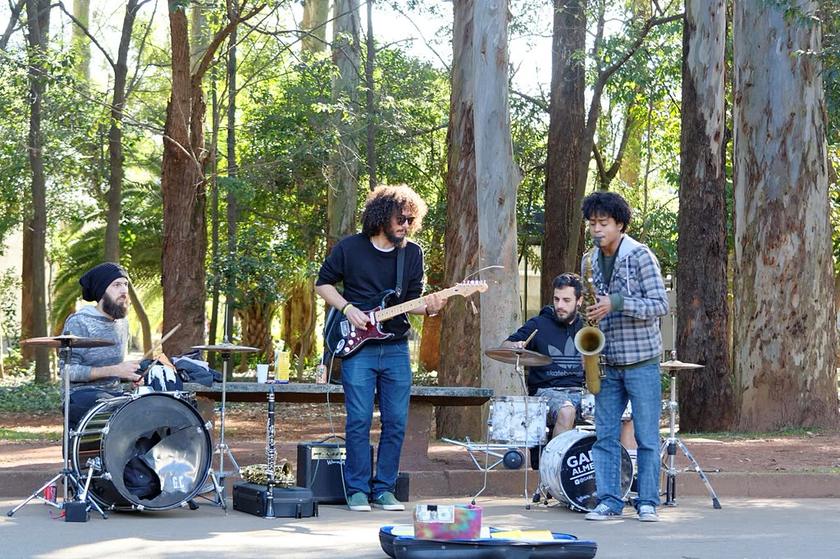
- Describe this picture. (45 s)
- Tell me about a time when you heard someone playing music in the street. (45 s)
- Should street musicians be allowed to play anywhere in a city? Why or why not? (45 s)
Part 3 · Compare two photos
Part 3: Comparing two pictures. Look at the two photographs. You will answer three questions, with 45 seconds for each answer.


- Describe these two pictures. (45 s)
- Which of these two activities would you prefer to try? Why? (45 s)
- What are the benefits of making music with other people? (45 s)
Part 4 · Long turn: Music in everyday life
Part 4: Discussion. You will see three questions on one topic. You have one minute to prepare and two minutes to answer all three questions together.
- Tell me about a singer or a band that is popular in your country.
- Why do you think music is so important in many people's lives?
- Is it better to learn music as a child or as an adult? Why?
60 s to prepare, 120 s to answer all three questions together.
How to assess yourself
In the real exam each part gets a mark, and the examiner listens for the same four things in every answer. Play each recording and ask yourself:
- Fluency and cohesion: did I speak for the whole time without long pauses, and did I link my ideas (because, although, however, on the other hand)?
- Vocabulary: did I use varied, precise words, or did I repeat the same ones?
- Grammar: did I use the right tenses, and did I try structures beyond the simplest ones?
- Pronunciation: would a stranger understand me easily at first listen?
And one that is not a language criterion but costs marks every time: did I actually answer the question that was asked, or did I talk around it?
Tip: in Parts 2 and 3, describe first (who, where, what is happening), then compare or give your opinion. Running out of things to say usually means the description was too short.